 By Othon Jarle
Not every outdoor space improvement requires a full renovation. In fact, some of the most meaningful changes to how a backyard looks and functions can be achieved through targeted, thoughtful additions that cost a fraction of what a complete redesign would involve. The key is identifying which changes will have the most impact on actual daily use and directing effort and investment there rather than spreading it across the entire space.
This is the approach that delivers the most satisfaction for the investment made, and it starts with an honest audit of what is actually limiting the use of the outdoor space right now.
Audit Before You Act
The most useful thing a homeowner can do before spending anything on an outdoor space is to spend a week paying deliberate attention to how the space is currently used, or more accurately, how it is not used. When does the family go outside? What brings them out? When do they come back in? What would need to be different for them to stay outside longer or go outside more readily?
The answers to these questions reveal the actual friction points in the outdoor space, which are almost always different from what people assume they are. A family that rarely uses the backyard in the afternoon might assume the issue is lack of things to do, when the actual issue is lack of shade making the space uncomfortable during those hours. A space that children drift away from quickly might need more structured challenge rather than more open space.
Once the actual friction points are identified, the improvements that address them directly produce immediate and noticeable change in how the space is used. Improvements that address issues the space does not actually have produce relatively little change regardless of how much they cost.
Adding Structure Without a Full Rebuild
Many backyards that feel lacking are not lacking space. They are lacking the structures that give space purpose and make it engaging for different members of the household. Adding structure without a full renovation means choosing additions that are self-contained, do not require significant ground works, and can be installed without disrupting the rest of the garden.
A freestanding shade structure can be installed in a single day and immediately changes the usability of the area it covers. A raised garden bed built onto an existing paved surface adds a productive and visually interesting element without disturbing the underlying surface. A quality fire pit positioned on an existing paved area creates an evening use for the garden that most backyards currently lack.
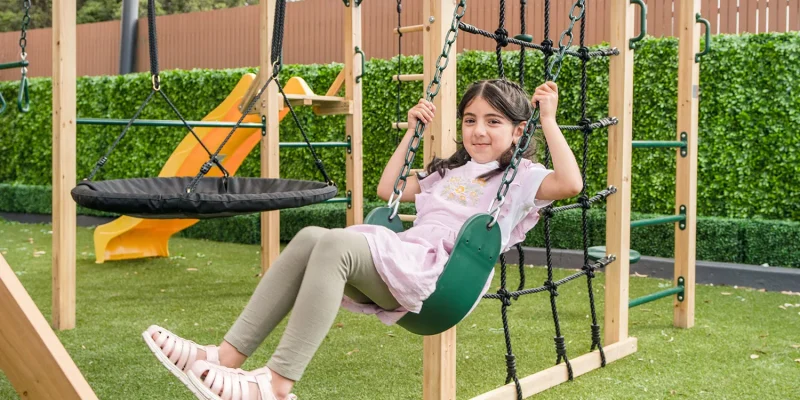
For families with children, adding a quality play structure is frequently the single highest-impact change available in terms of how much it changes daily use of the outdoor space. Well-designed swing sets that include multiple activities within a single structure provide sustained engagement across different ages and play styles, turning a backyard that children walk through into one they choose to spend hours in. That shift in how children use the outdoor space also changes how the whole household relates to it.
Lighting Transforms Evening Usability
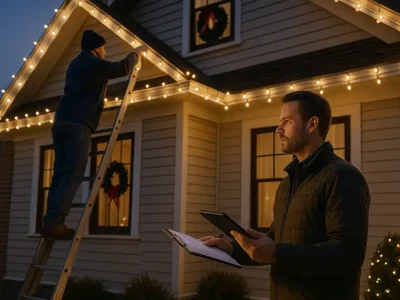
Outdoor lighting is one of the most consistently underinvested aspects of backyard improvement, and one of the highest-return ones. A backyard without adequate lighting is functionally unusable after dark, which in many seasons represents the majority of the hours when adults would most like to be outside.
The transformation that good outdoor lighting produces is disproportionate to its cost. Path lighting that guides movement through the garden safely. Warm ambient lighting under a pergola or shade sail that makes the entertaining area feel like a room. Feature lighting that draws attention to a garden tree, a textured wall, or a water feature. Together these layers turn an invisible space into one that actively draws people outside in the evenings.
Solar lighting has improved significantly in quality and output over recent years and provides a genuinely viable option for areas of the garden away from power sources. For primary entertaining areas where consistent, controllable light is needed, hardwired options remain the more reliable choice. A combination of both is often the most practical approach.
Planting Additions That Make an Immediate Difference
Strategic planting additions can significantly change the feel of a backyard without a full garden redesign. The most impactful planting additions are those that address specific gaps in the current garden: a lack of privacy, a blank fence line, an absence of colour in a particular season, or a need for vertical interest in a flat space.
A row of fast-growing screening plants along a boundary provides privacy and transforms the sense of enclosure in the garden within a single growing season. A climber trained along a fence or pergola softens hard surfaces and adds a living element to what was previously a blank architectural surface. A large specimen plant in a quality pot positioned as a focal point in an otherwise plain area introduces instant structure and interest.
The rule that applies to all of these is choosing plants that suit the specific conditions of the site rather than those that look appealing in the nursery. A plant in the wrong conditions requires constant intervention to survive and rarely performs as hoped. A plant genuinely suited to its site establishes quickly and delivers returns with minimal ongoing effort.
Furniture and Accessories as an Immediate Upgrade
Outdoor furniture has a greater impact on how an outdoor space feels and functions than most homeowners appreciate until they replace a tired or ill-fitting set with something genuinely suited to the space. The right outdoor furniture in the right configuration for the size of the space makes the entertaining area feel resolved and inviting. The wrong furniture makes it feel provisional and incomplete.
Scale matters significantly. Furniture that is too small for the space makes the area feel temporary. Furniture that is too large crowds the space and prevents comfortable movement. Measuring the area carefully before purchasing and working within the footprint that leaves adequate clearance around each piece produces a result that feels considered rather than assembled by accident.
Accessories, outdoor cushions, a quality outdoor rug, lanterns, and a side table or two, do for an outdoor space what soft furnishings do for an interior. They add warmth, texture, and personality. They also signal that the space has been thought about, which changes how both residents and visitors experience it.
The accumulated effect of targeted, well-chosen improvements to an existing outdoor space is often more satisfying than a complete renovation, both because each change is immediately visible against a familiar background and because the process can happen incrementally as budget and timing allow rather than requiring a single large commitment.